A Lesson from My Computer

pen_and_paper_2

If you want to make even the most seasoned writer tremble whisper the words “query letter” in his ear. The dreaded query letter is the inescapable bane of every writer’s existence—at least every writer that is looking for an agent. There are blogs with ominous names like Query Shark whose sole purpose is to help writers navigate these dangerous waters. Not only is the required format rigidly precise, it is also subject to change at a moment’s notice. Author Sean M. Chandler comments that he knows several agents who won’t read a query letter if the writer’s contact information appears at the start of the query. According to some agents, it’s now supposed to appear at the end of the letter below the closing. I was also told several years ago that in a pitch or query the writer should always reveal how the story ends. Now we’re supposed to keep the agent guessing. The list of conflicting information goes on and on, but the one thing that everyone seems to agree about is that most agents don’t want to read my query letter. They will look for any excuse—a single spelling error, improperly positioned contact information, etc.—to stop reading and delete it. So the letter must be perfect.

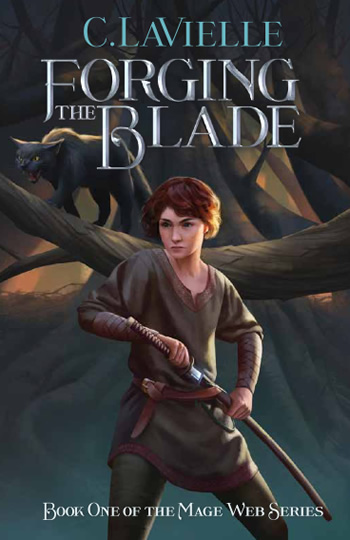
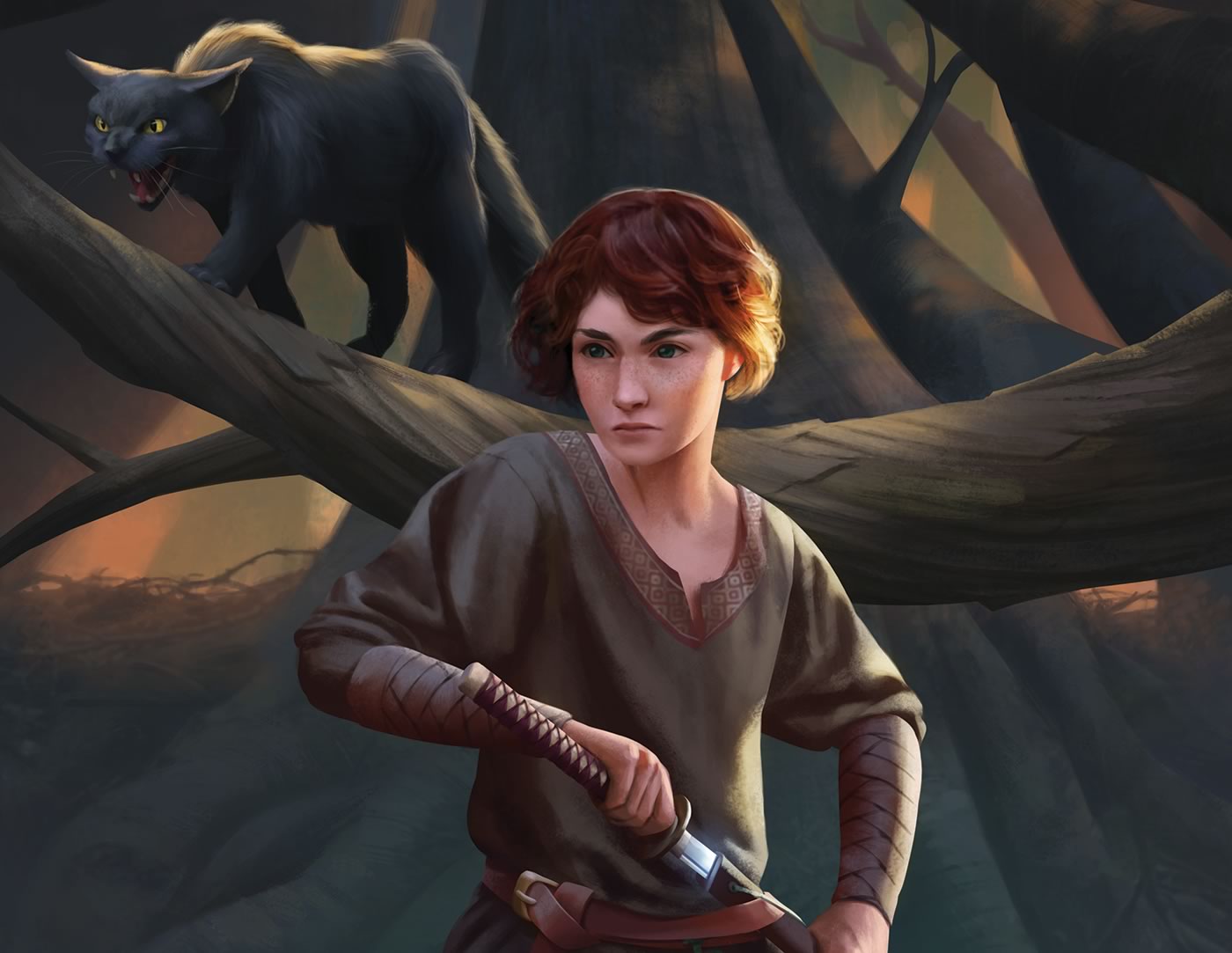
Figuring out the format may be difficult, but the hands down most painful part of writing a query letter is condensing a book that took years to write into 300 words or less and making it sound irresistible. I’ve written nearly 100 queries for FORGING THE BLADE over the past four years. Some are painful to reread and some are pretty good, but I think I’ve just written my best query ever—with a little help from my computer.

A few weeks ago I wrote a really good query letter and read it to my kids (who are in their 20’s and 30’s). I distilled their comments and suggestions down to their practical essence, rewrote it, and read it to them again.

“Even better,” they said.

Fine. I hit save (I’m an avid saver) and filed it.

I always wait a few days to a few weeks to review my work. It gives my unconscious awhile to chew on it and lets me see it with fresh eyes and ideas. So a few days later I sat down to reread and revise it. And it was gone.

anxious_womanHorrors. My beautiful query letter was lost in cyberspace.

I checked everywhere. I did key word and first sentence searches. I checked the recycle bin. Nothing. I waited a day and checked again. I even asked my husband to look. He couldn’t find it either.

So I wrote another one. I could remember some of the lost one, so it only took me about forty-five minutes. This one was even better.

The next day when I tried to pull the new letter up it was gone too. But the lost letter was there! No kidding, it was there—right where it was supposed to be.

So I rewrote the lost letter with the improvements I could remember from the second one and came up with an even better letter.

image by trileafdesign.com

image by trileafdesign.com

The next day both letters appeared. It’s true, I swear it’s true. I compared the two and came up with an even better letter and the realization that my computer had taught me a great editing technique for short pieces of writing. Write your first draft, wait a few days, then write it again without looking at the first draft. It will probably be a better version. Go back to the first draft and edit it without looking at the second draft. Wait a day or so then compare both drafts and revise further.

When I told this story to a friend he said, “Your computer loves you.”

I thought about that for a moment and decided he was right, it must. After all, it gets my undivided attention much more often than anyone else, even my husband.

Thank you, computer.

Leave a Comment

Filed under Getting Published, Writing

The Sun, Part II: The Major Arcana and The Hero’s Journey

The_Sun_002

ReshResh is the Hebrew letter that corresponds to The Sun. It means head, chief, total, and first. These are all things that we associate with The Sun. But resh also means grieved, poor, poverty, afraid, and last. These are not bright, strong sun words, What are they doing here? The quick and easy answer is that the Hebrew letters have many other uses besides tarot correspondence and we shouldn’t expect perfect matches all the time. However, resh is the only Hebrew letter that has such strong dual meanings, and I think this is a clue. The Sun is all about unifying dualities into ayin_yang_sun functional, integrated whole (see The Sun I). Like, what is between the first thing and the last thing? Everything, that’s what.

Even the symbol of the Sun suggests wholeness and unity. When I was growing up, whenever my expectations were too high my mother would accuse me of “wanting the world with a fence around it.” That image always comes to mind when I see this glyph.  Sun (2)When we have truly achieved the union of opposites within our psyches, having it all and desiring nothing (the world with a fence around it) is a possibility.

Churchill,_victory_symbol

The history of the V for victory sign is interesting. Click on Winston’s nose to review it

In a reading, The Sun is a true blessing. It’s most simple, all purpose meaning is Victory, or the resolution of opposing forces. But it can also mean clarity and wisdom. Things that seemed incomprehensible, mysterious, or hidden are now clear as day. Even if it appears in the past, it means that you now have the confidence and experience to be successful in the present and future.

When The Sun appears with The Lovers in a reading there are at least two possible meanings. If cups appear with these two major arcana keys, especially the ace or two, it clearly indicates success in love, a passionate and joyous relationship. If there are swords present, especially the ace or two it means an excellent choice, decision, or plan that will lead to success.

When The Sun appears with The Chariot, it means complete victory or mastery. Everything is really going your way.

Pentacles and The Sun signify material wealth or radiant health.

When the Sun appears with The High Priestess or The Moon it means understanding of things hidden, an intense psychic and/or emotional breakthrough that will change the querent’s life for the better.

There is nothing ambivalent about this card. It is awesome good. Even when it’s reversed it’s still good. Just not as good. Even when there are negative cards present, The Sun shines its light on them and makes them comprehensible and no longer so difficult.

In the hero’s journey, The Sun is the card of the hero. It is also the point at which the quest is achieved. In The Writer’s Journey, Christopher Vogler refers to this as “seizing the sword.”

Wizard_of_Oz

In The Wizard of Oz this happens when Dorothy takes the Wicked Witch of the West’s broomstick, her ticket back home.

Avatar

In the movie Avatar, the Sun moment happens when the planet Pandora defends herself against her extraterrestrial rapists by mobilizing her wildlife to aid the hard pressed Na’vi and defeat Colonel Quaritch’s forces.

Dangerous_method

The Sun moment can also be a personal achievement. In the movie A Dangerous Method, psychologist Sabina Spielrein is unable to achieve her goal of reconciling Carl Jung, her lover and psychoanalyst, and Sigmund Freud, her mentor, but she is able to accomplish the more important task of reconciliation of the conflict within herself.

Star Wars, Empire at War, developer Petroglyph, publisher, LucasArts.png

Star Wars, Empire at War, developer Petroglyph, publisher, LucasArts.png

Often the Sun moment of the hero’s journey involves not only the hero’s attainment of the object of the quest, but also the awakening within the hero of an essential power or talent. In the movie Star Wars this happens when Luke and his fellow pilots are attacking the Death Star. In the midst of a crushing battle, Obi-wan-kenobi reminds him to “Use the force, Luke,” and our hero at last slips into the Satori-like state necessary to qualify as a Jedi Knight. Using his hard won enlightenment he is able to destroy the Death Star and save the day.

The Sun is the entire raison d’être for the hero’s journey.

It is fulfillment, completion.

004

1 Comment

Filed under Major arcana, Tarot, The Hero's Journey

Happy Belated Beltane!

Sorry this is so late. I think the sun has addled my poor northwestern brain.

Columbia Gorge, view from Catherine Creek

Columbia Gorge, view from Catherine Creek

This year Craig and I ventured into the Columbia Gorge with a few friends to celebrate The May. We toasted summer in with libations of wine and a lovely lunch, but we were also there to stalk the wild and wonderful Lewisia rediviva.

Lewisia rediviva, Wikimedia commons

Lewisia rediviva, Wikimedia commons

And we did indeed find it. More abundant than we’d ever seen it before.

One of the many Lewisia rediviva at Catherine Creek

One of the many Lewisia rediviva at Catherine Creek

I love this flower because it is so exquisitely beautiful and so ephemeral and so impossible. It blooms out of the basalt bones of the gorge, opens its pink petals to the sun for a few short days, and disappears. Amazing.

Lewisia buds, Catherine Creek

Lewisia buds, Catherine Creek


1 Comment

Filed under Wheel of the Year

The Sun, Part I: The Major Arcana and The Hero’s Journey

The_Sun_002

After the destruction of The Tower the hero, if he perseveres, will always find The Star, the bright spot in the nighttime that gives him hope, inspiration and the courage to travel the realms of The Moon and learn her secrets. Then and only then can he understand the true nature of reality. It becomes plain as day.
Summer_Solstice
The Sun reveals all. Unlike The Moon key, he shows not just a profile, but his full face. He still casts shadows, but unlike moon shadows that conceal, frighten, and mystify, sun shadows add dimension and interest. Sunlight shows everything in its true form. All mysteries are revealed in its warm, nourishing light.
shadow
The Sun is everything to us. We are truly solar powered beings. His dazzling rays power the earth, bringing us food, warmth, weather, and life itself. His overwhelming presence attracts us and keeps us on our cyclic path.

www.rosenberryrooms.com

www.rosenberryrooms.com

Sunlight also nourishes our spirits. As the days grow longer and warmer our souls blossom with joy and renewed vigor. Without The Sun Mother Earth would be a barren rock tumbling through a black void.

In the Rider-Waite-Smith deck The Sun shines on a small child riding with easy balance on the back of a white horse. According to the Brihadaranyaka Upanishad (I, 1), a white horse is a symbol of the cosmos. He/she carries the red banner of vital life force. This is Carl Jung’s Eternal Child, the part of us that existed before we forgot our spiritual natures, bought into the myth of the physical world, and were indoctrinated into the mores of human society; the part of us that plays joyfully throughout the infinity of the cosmos. Or, as the Zen koan says, our original face. The face that existed before our mothers and fathers were born.

Most other decks depict the sun shining on two children, usually a boy and a girl, holding hands or embracing. This is another way of depicting the Eternal Child. It reminds us that to acquire the perfect harmony and joy of this archetype we must balance and reconcile our yin and yang,  masculine and feminine,  animus and anima, body and soul, conscious and unconscious.*

The Marseilles Deck

The Marseilles Deck

Builders of the Adytum deck

Builders of the Adytum deck

Housewives Tarot deck

Housewives Tarot deck

We have seen this triad of a central figure and two opposing figures over and over again in the major arcana.

The High Priestess as middle pillar to the opposing pillars of mercy and severity

The High Priestess as middle pillar to the opposing pillars of mercy and severity

The Hierophant, sitting between those same two pillars and speaking to two different/opposing clergymen. This card actually shows two triads.

The Hierophant, sitting between those same two pillars and speaking to two different/opposing clergymen. This card actually shows two triads.

In this key the man(conscious) looks to the woman (unconscious) who looks to the divine or super-conscious.

In this key the man(conscious) looks to the woman (unconscious) who looks to the divine or super-conscious.

The Charioteer driving his black and white steeds.

The Charioteer driving his black and white steeds.

Justice sitting between those same two pillars of mercy and severity.

Justice sitting between those same two pillars of mercy and severity.

Temperance synthesizing opposing forces.

Temperance synthesizing opposing forces.

The Devil, perched between and separating a man (conscious mind) and a woman (unconscious mind)

The Devil, perched between and separating a man (conscious mind) and a woman (unconscious mind)

The Star, pouring hope and strength into our minds (pitcher in her right hand) and bodies (pitcher in her left hand).

The Star, pouring hope and strength into our minds (pitcher in her right hand) and bodies (pitcher in her left hand).

The Moon shining on two dogs, the conscious and unconscious mind, and two towers, stand ins for those two ubiquitous pillars.

The Moon shining on two dogs, the conscious and unconscious mind, and two towers, stand ins for those two ubiquitous pillars.

But notice that the two opposites are always pictured as separate. In The Sun key the two children embrace or hold hands, the opposing/opposite forces are at last united into a functional, integrated whole*

This new and complete entity is fragile. The key implies this by showing a protective wall between the two entwined children and the four sunflowers representing the four elements of fire, water, earth and air or the four kingdoms of animal, vegetable, mineral, and human. The wall creates a temnos or sacred space that protects and defines this ephemeral being.

The Sun is all about spiritual and physical power and well being which can only be brought about by the integration and the resolution of opposites.

Click on the picture to see a video of the Beatles and Here comes the Sun. Image by Mark Andreas.

Click on the picture to see a video of the Beatles and Here comes the Sun. Image by Mark Andreas.

*Jung and Tarot, An Archetypal Journey, Sallie Nichols

4 Comments

Filed under Major arcana, Tarot, The Hero's Journey, Uncategorized

Moonshine and the Major Arcana

The_Moon_001

The Moon is all about the way we interface with the unknown, or the unconscious , or the astral plane, or the spirit world, or the realms of gods, daemons, and demons, or parallel universes. These are the strange and frightening worlds every hero must travel to complete his or her quest.

From Wikimedia Commons

From Wikimedia Commons

Since the keys of the major arcana trace the story arc of this journey, The Moon is a pivotal card, casting its eerie shadows over many of the other keys.

Hero's_Journey

The card most obviously connected to The Moon is The High Priestess because the planet attributed to this card is the Moon. To make absolutely sure you get the connection most depictions of this card are loaded with lunar images.

The High Priestess, by Cathy McClelland

The High Priestess, by Cathy McClelland

The High Priestess is the guardian of the threshold between the known and the unknown, the conscious and the unconscious mind, the hero’s ordinary world and the world he must enter to complete his quest. She can either help or hinder him as he makes his transition. Her motives are inscrutable because she works from knowledge and understanding gained in the realms hidden by the veil draped between the two pillars—the place our hero is headed for but knows nothing about. Like these pillars, the two towers in The Moon key mark the boundary between the known and the unknown. Her sparkling blue robe shimmers into water and flows out of the card, becoming all the bodies of water pictured in the rest of the cards and gently reminding the reader about the ubiquitous influence of the realm of The Moon.

The_Chariot_001The Moon rules the sign of Cancer, the astrological sign that corresponds to The Chariot. The charioteer in the Rider Waite Smith deck has crescent moons on his shoulders to remind us of this fact. The fabulous Merkabah is often described as a chariot that will take a devotee to the higher realms, the territory of The Moon.

The_Hermit_001

When we look at the numerology, the most obvious correspondence is with The Hermit; since 18, the number of The Moon, reduces to 9, the number of The Hermit. This is The Man who’s been there, done that, and gotten the T-shirt. He stands high on a mountaintop holding up his starry lantern to guide others. He can be a mentor to our hero or he can be our hero herself after she successfully returns from her journey.

When we divide 18 by 3, the number of the Empress, or the fertile, earthy counterpoint to the High Priestess, we get 6, the number of The Lovers. Aside from the obvious fact that the moon is always associated with lovers and romance, there is yet another connection. Most depictions of this card show a man, a woman, and an angel or higher being. This is symbolic shorthand that beautifully describes the way to the higher self or the divine. The man (consciousness) has eyes only for the woman (the physical world). But the woman (who is actually the unconscious) looks to the divine. To journey to the realm of The Moon, the conscious mind must be intimately connected with the unconscious mind.

The Lovers, from The Gilded Tarot

The Lovers, from The Gilded Tarot

The next multiple of 6 is 12, the number of The Hanged Man. This is the card of the mystic who voluntarily sacrifices everything to gain enlightenment by traveling to the realm of The Moon .

The Moon, whose number is 9 comes just before The Sun, 10 (19 reduced). “The Perfect Ten” is the number of completion and highest excellence. To become whole and integrated, to become the best person we can be, we must become the hero who masters the strange and dangerous byways of The Moon and returns to tell the story.

From the Thoth Deck

From the Thoth Deck

2 Comments

Filed under Major arcana, Tarot, The Hero's Journey

The Good Fairies of the Publishing World

pen_and_paper_2I was just reminded in no uncertain terms that to become successful in almost any endeavor, it’s not just what you know, but who you know.

Back in December I wrote a post about possible reasons why over 44 agents have rejected my manuscript and ended with the thought that I might have to self publish it. A friend of mine, Kier Salmon, immediately e-mailed me. “Talk to me before you do anything,” she said. “I work in the business and it’s easy to get burned.” The next day I got another e-mail from her telling me that Linn Prentis, the agent she works for, loves tarot decks and wants to see the manuscript.

Linn_Printis_

I was thrilled to the tips of my keyboard tapping fingers. I waited until after the holidays and then e-mailed it to them as an attachment.

And waited…

And waited.

Last week I finally found the reply in my in-box. It was a rejection letter, but of a very different sort. Both Kier and Linn had actually read the entire manuscript and they liked it!

This is huge. When a writer sends an agent an unsolicited manuscript, all the agent wants to see is the query letter, a synopsis, and the first ten pages. She usually only reads the first few sentences of the query letter and if it doesn’t pique her interest she goes on to the next query in her jam-packed in-box. If you’re lucky, she’ll read your synopsis before going on, and if you’re really lucky, she’ll skim over the first 10 pages. Most don’t even send a rejection letter.

When I printed out my rejection letter it came to nearly two pages, single-spaced in 12-point Gill sans font. It was packed with suggestions for improving the manuscript and making it publishable.

  • It isn’t formatted quite right. Easy to fix.
  • It is too long. Most editors/agents don’t want to plow through a massive debut novel. After trolling the web for acceptable manuscript lengths http://kidlit.com/2009/11/13/manuscript-length/, I found that the consensus placed a YA fantasy manuscript at 70,000 to 80,000 words-90,000 tops. My manuscript is 92,000 words. Many agents and editors will automatically reject a query if the word count is too high. I have some babies to kill—not an easy task. The prologue is a waste of space and the most poorly written part of the story. Can it, they said.
  • Molly’s age is unclear. This is not good, especially in YA. I know that Molly is fifteen, she’s been with me for years. I know everything about her. But the reader doesn’t. I do mention once on page 9 that she’s fifteen, but there are no other clues in the early chapters. Her actions could be those of a bratty eight-year-old or a sullen teen. Their fresh eyes caught a vital snag.
  • It is unclear how Molly’s grandmother feels about her and what her motives are in sending her only living relative into a dangerous alternate world. It’s made clear later in the manuscript, but the reader should have some earlier clues. “The situation at the book’s start doesn’t gel,” they said.
  • The tarot connection doesn’t work; take it out. This was hard news. But then I realized that the most important tarot connection is the fact that each chapter is a major arcana card. I had read that the tarot major arcana taken in order, 0-21, tell the story of the hero’s journey. My main purpose in writing the manuscript was to do this and I did. I am OK with taking out all the other tarot references.
  • The story drags in the first few chapters, and this is precisely where a story shouldn’t drag. It must grab the reader right at the get-go or he/she won’t continue reading. These are also the pages an agent/editor will read to judge the story.
  • Molly learns the art of sword-craft way too fast. I need to stress the fact that after three months of training she is good but still a beginner. That isn’t apparent in the story.

Kier and Linn essentially quick-edited my manuscript, a process that costs hundreds of dollars, free of charge. When I thanked them, Kier wrote back and said, “No problem. This is what we do.” But I’m quite sure that they don’t often do this for unsolicited manuscripts.

Alice_in_WonderlandAfter ruminating over all this advice and how to go about fixing the problems, it came to me that I’d started Molly’s story in the wrong place. I didn’t realize it at the time, but the King in Alice’s Adventures in Wonderland gave me my first and most potent bit of writing advice when I was just a child. “Begin at the beginning,” he said to the White Rabbit, “and go on till you come to the end: then stop.” This is the way most works of fiction are written because this is the way we live our lives. What comes before is the thing that causes what happens next. Most stories, especially those told by new writers, need to start early enough so the reader understands why the rest of the story goes the way it does and why the characters behave the way they do. This sounds like inanely obvious advice, but it is actually quite difficult to decide where your story actually begins. Hundreds of articles and blog posts and even a few books have been written about this. I hadn’t really started Molly’s story early enough, and so hadn’t given the reader time to get to know her and her grandmother before Molly lands in Damia, a parallel universe, and begins her journey.

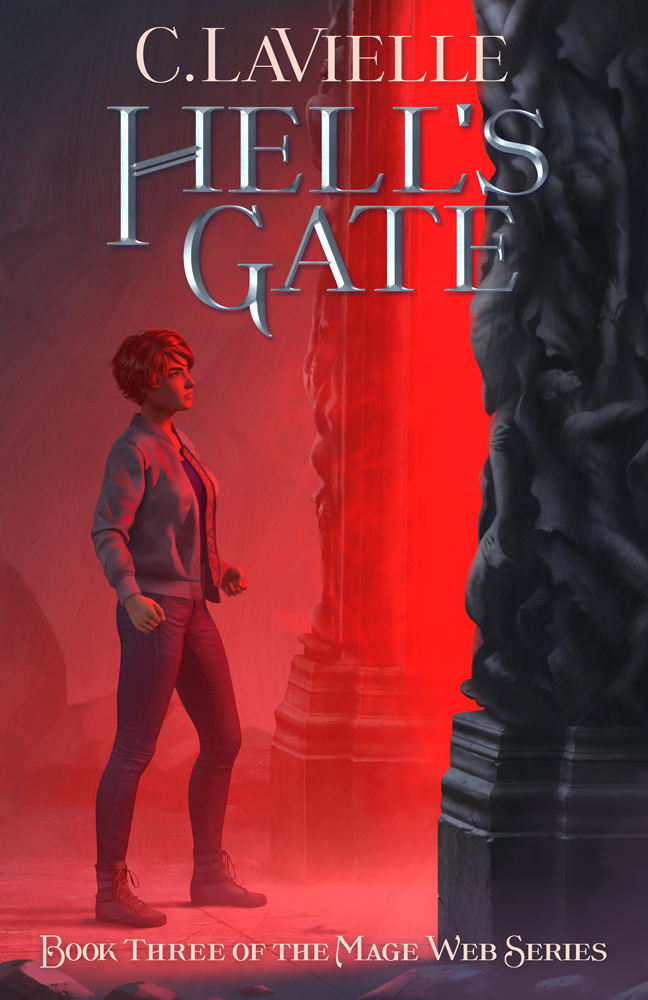
So, it’s back to the drawing board for Forging the Blade. The second book in the series, Mainly by Moonlight, is as finished as I can make it. My first readers have read it and commented; and my writer’s group (headed by Jessica Morrell, my editor) has gone over the first third of it, and I’ve incorporated their revisions. In a few weeks Jessica will review the entire manuscript. The third and maybe final book in the series is plotted and I’ve started writing it.


10 Comments

Filed under Book Review, Getting Published, Tarot, Writing, Young Adult Fantasy

Wishing You a Joyous Spring Equinox!


Spring,_blog.navypierBehold, my friends,
the Spring has come;
the Earth has gladly received
the embraces of the Sun,
and we shall soon see
the results of their love!
Sitting Bull

2 Comments

Filed under Wheel of the Year